SS Panzer Commander, 9th Pz Div “Hohenstaufen”
3rd Reich War Hero at Arnhem
Knight’s Cross & DKiG Recipient
SS Standartenfuhrer
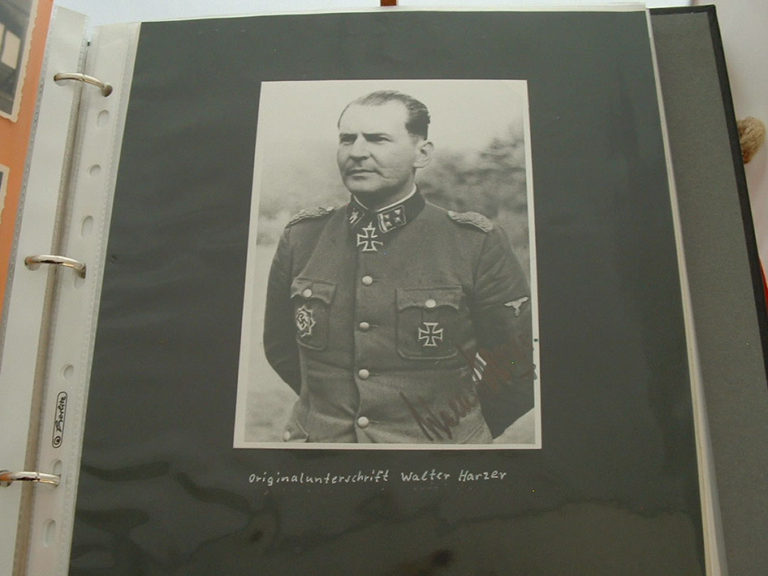
Walter Harzer
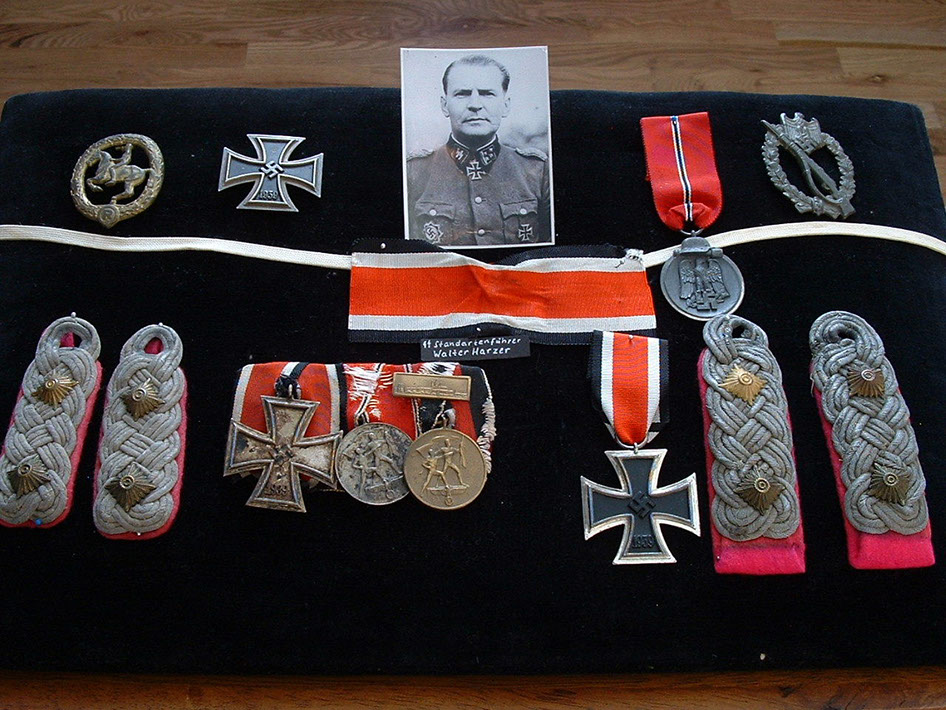
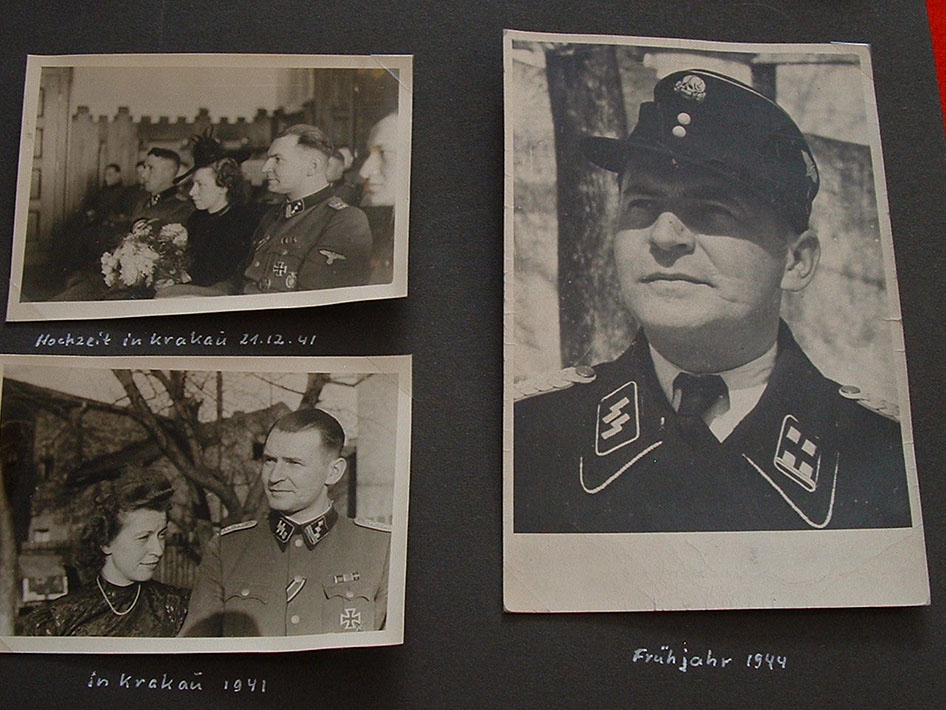
Walter Harzer had a colorful military career which started in 1933, and spanned over the next 12 years of the “Thousand Year Reich” He began his military service with the SS Political Readiness Detachment during the spring of 1933, and later that year joined the German Army. It was in March of 1934, young Harzer joined the SS Verfugungstruppe, later graduating from the SS Officer’s Candidate School, at Bad Tolz in 1936.
When WWII broke out in Sept. of 1939, Walter Harzer then attached to the SS Deutschland Standarte, participated in the invasion of Poland, earning him the first of his bravery medals, the Iron Cross 2nd Class. From the campaign in Poland, Harzer was then transferred to the SS Junkerschule at Braunschweig, becoming a combat tactics instructor. With stints as a commanding officer within the 4th SS Infantry Regiment, 10th Panzer Division Frundsberg,10th Panzer Division, & Eastern Front campaign, Harzer was not only on the fast track of promotions, he also was becoming a decorated soldier.
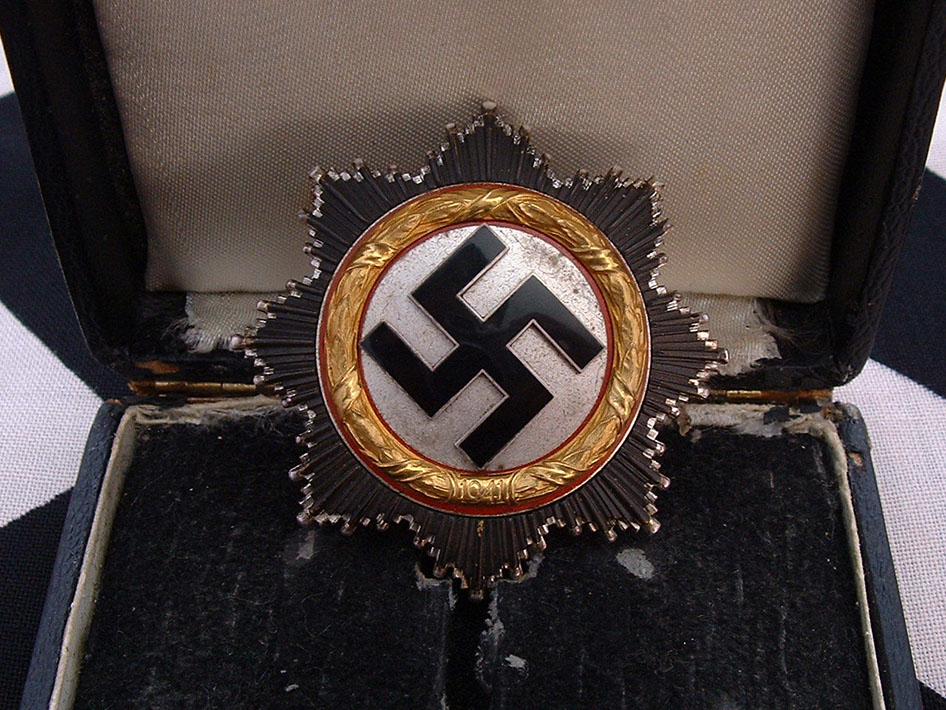
Already an SS Strumbannfuhrer by the time that he joined the 10th SS Panzer Division, Hohenstaufen, in the fall of 1943, Harzer found himself on the soil what was soon to be the battle ground after D-Day. For his actions as a commander and leader during fierce fighting first in the Ukraine, and later throughout Normandy & Caen during the invasion, Harzer was awarded the German Cross in Gold.
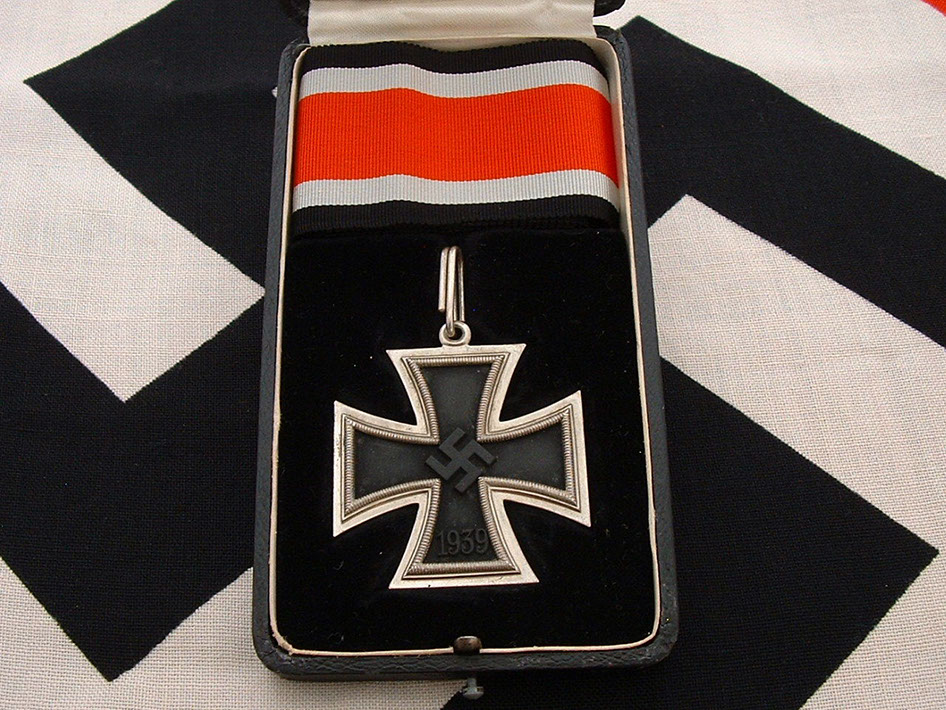
In Sept of 44, Harzer then the sole commander of the 9th Panzer Division, was to hold the Bridge at Arnhem, to prevent the allies from crossing the Rhine. Operation Market Garden launched by the allies, found what they were up against, when Harzer’s 9th, all but obliterated the British 1st Airborne Division. For this fierce battle achievement, Walter Harzer was awarded the Knight’s Cross. This historic event was to later become a book and then a movie titled, A Bridge Too Far.
Recalled back to Germany a month later, Walter Harzer was assigned first to the SS Mountain Corps, and then later to the SS Police Panzergrenadier Division, to face the inevitable. He surrendered to the Americans, on May 8, 1945.
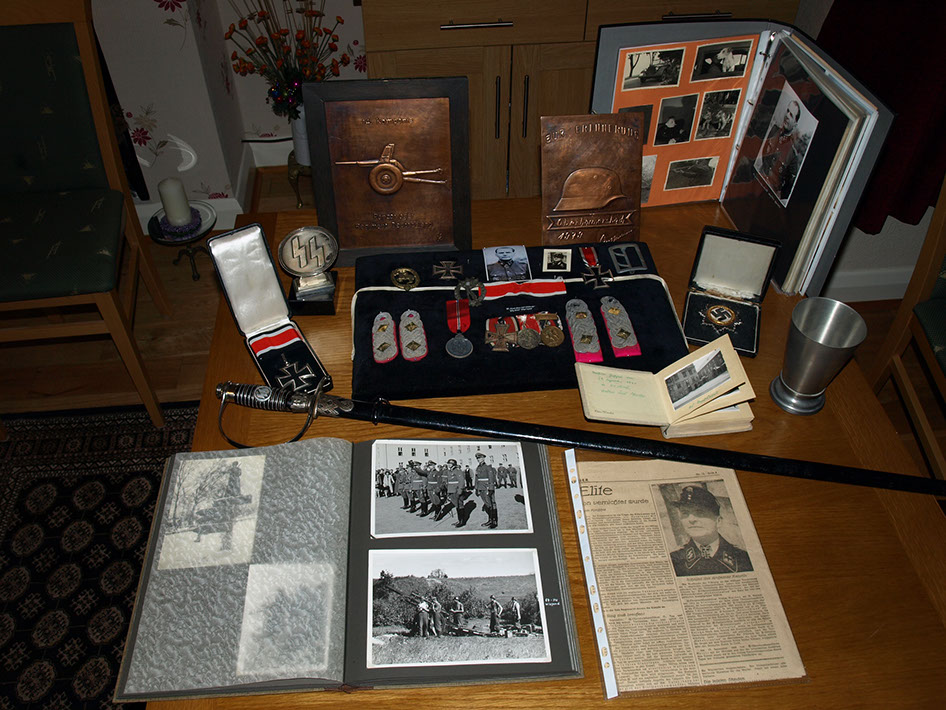
Pictured above, are the items awarded to, and worn by SS Oberfuhrer, Walter Harzer
Meda Militaria & The “Limey”!
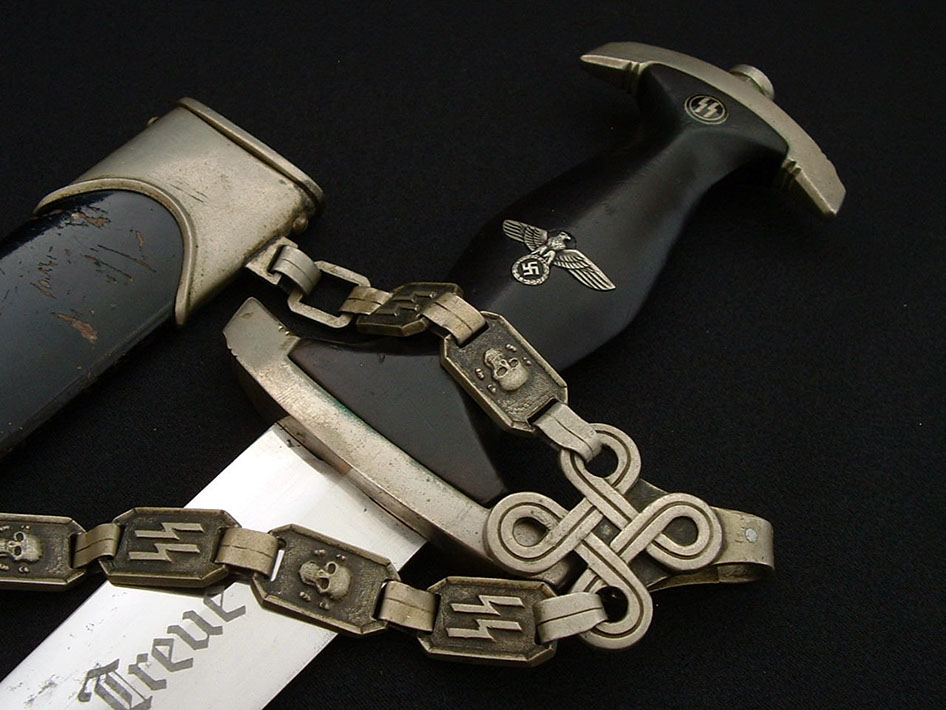
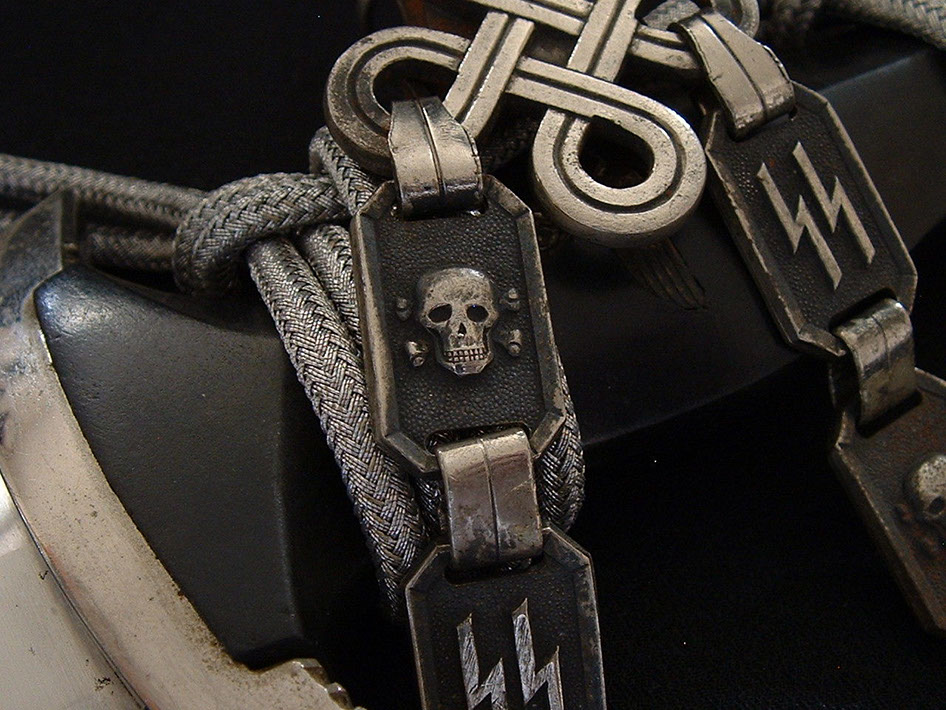
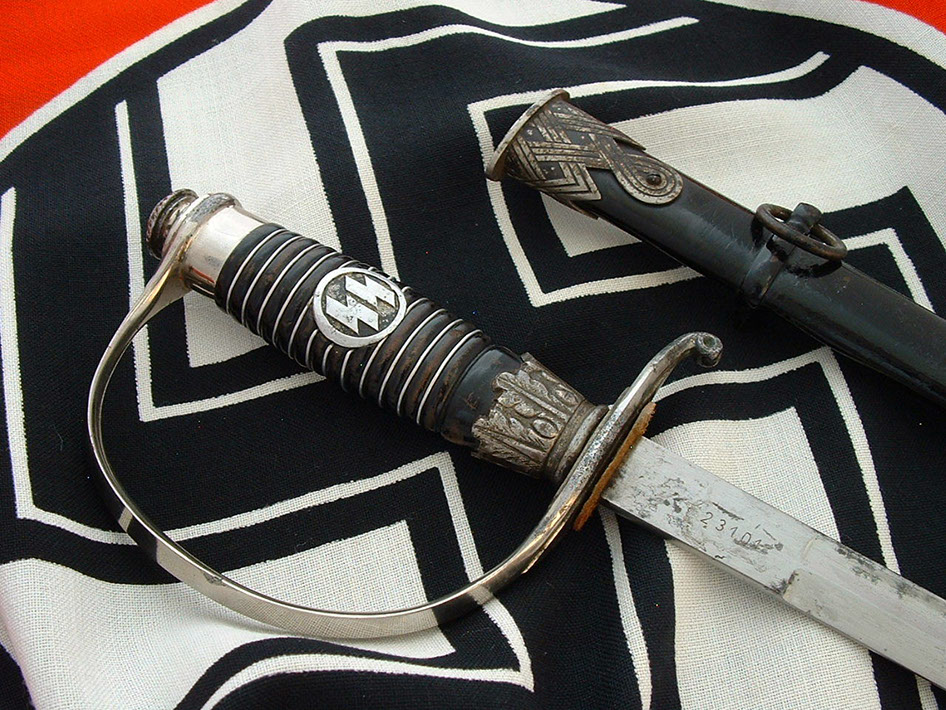
Himmler approved of a new type of scabbard hanger for the SS dagger, on Aug 25th, 1936. This became known as the M36 Chain Dagger. These new SS daggers with a chain suspension scabbard, have absolutely fascinated collectors of 3rd Reich edged weapons. Up until a few years ago, the terminology for the different chain configurations was quite confusing, to say the least. And even today, many enthusiasts as well as dealers, sometimes error in the actual type of chain dagger that they are discussing. Collectors previously used the terms Type I and Type II, as a matter of distinguishing what was thought to be the only 2 variety of chains. Then a new chain configuration was noticed about a dozen years ago, and it was termed Type III. That really threw a wrench into the mix, and made matters worse. The different names associated with theses chain varieties, was now totally cobbled. That’s because there was no correlation with any specific type of chain, and the time period that it was produced.
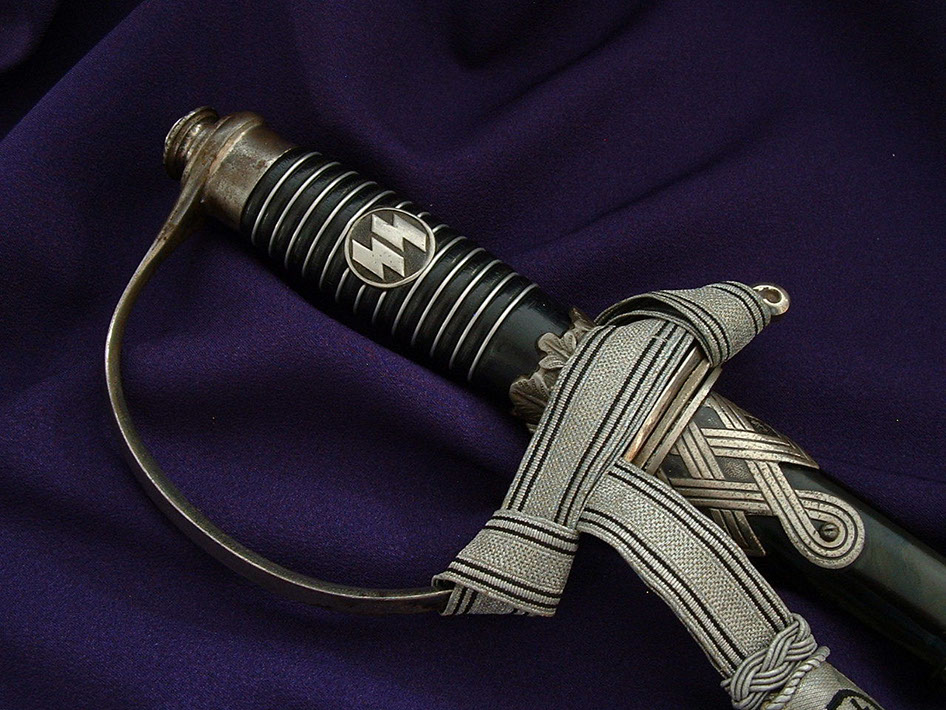
What many collectors don’t realize, is that just because you were an officer within the SS, it didn’t by any means qualify you automatically to be able to own, and wear the honor degen. There were very specific requirements laid forth by the Reichsfuhrer H. Himmler, that had to be met, in order for an individual to be entitled to wear the SS Ehredegen.
Among those strict requirements were the following:
1. Initially these swords were awarded to battalion commanders and higher ranks, within the SS Verfugungstruppen (SS-VT)
2. Additionally, those SS officers who held the rank of Standartenfuhrer and above within the Allgemenine, prior to April 1936, also qualified an individual as well. This is the date that the “official model 1936 SS degen” was first introduced.
3. The award was further extended to those that were department heads within the SS-Hauptamter or SS Main Office, directly under the Reichsfuhrer.
4. And finally, the newly graduates of the SS Officer Candidates Schools from Bad Tolz & Braunschweig, were also recipients of the SS Ehredegen.
The SS Honor Sword was in of itself a true award. It was presented with a personalized certificate, and was noted next to the recipients name in the SS Dienstaltersliste.
In the early days of collecting, 3rd Reich enthusiasts were quick to notice that the M36 SS Dagger was found containing 2 different chain varieties. The term Type I & Type II was adopted, and that is the way that it remained for over 50 some years. Since that time, collectors studying SS chain daggers realized that not only was the nomenclature confusing for the terms of the 2 different varieties of chains, but discovered there were at least 2 additional chain assemblies that hadn’t been addressed in the past. Finally in 2010, German SS dagger enthusiast and author Ralf Siegert, differentiated the chain configurations, and categorized them into characteristics, composition, and a chronological time-line of when they were manufactured. Although the edged weapon community is slow to adapt to Ralf’s new terms for the different types of chain assemblies, I hope that this will change over the next several years. As it is certainly easier to understand and comprehend when a particular variety of SS Chain Dagger is being discussed. As many collectors now know, Ralf used the terms Type A, Type B1, Type B2 & Type C, to make it easier for collectors to more clearly understand the different chain assemblies and their applications.
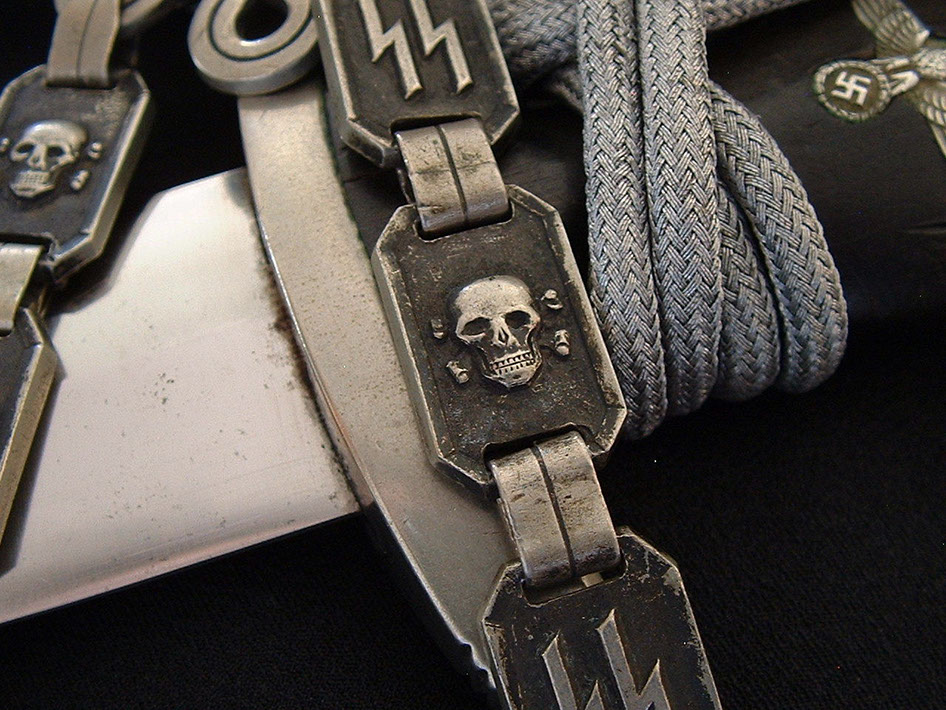
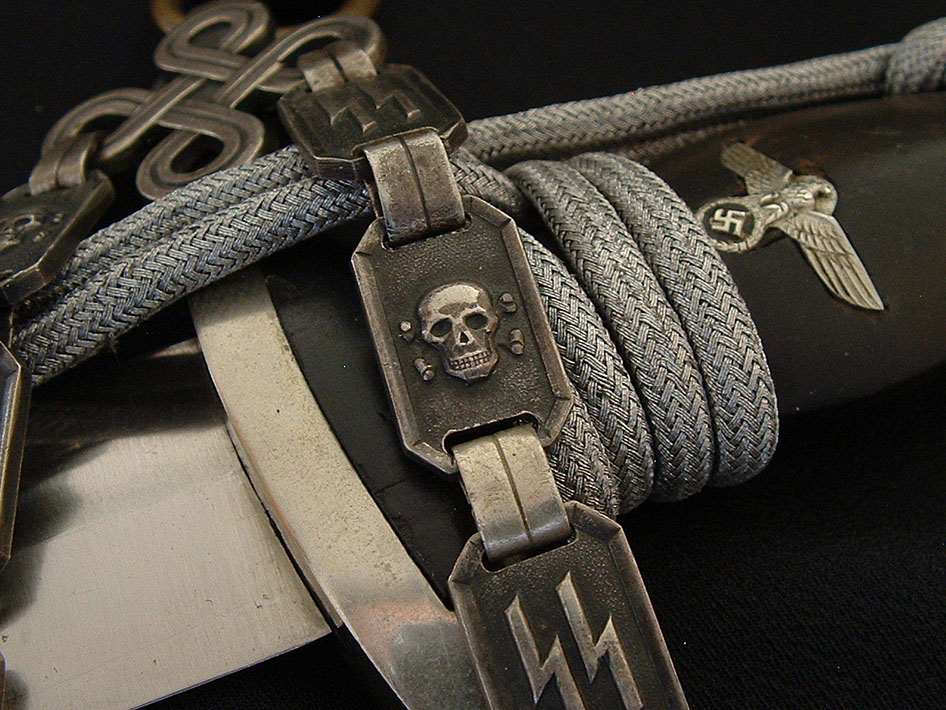
Now the Type A and B1’s, are always nickel composition, with slight differences in the details and characteristics of the shape of the skull, runes, and connectors. Although the Type A had a relatively short production run time, the Type B’s continued until the end of edged weapon production. The main difference between the B1’s and the B2’s, is that the former is solid nickel construction, and the later steel composition. Pretty straight forward. As edged weapon companies were no longer afforded nickel to use in the production of components, steel, zinc and other alloys became the norm. Again, the Type B1 and B2 chain assemblies for all intent and purposes, are nearly identical. With the one exception of either of being manufactured out of nickel, or out of steel.
Now we come to the Type C’s. It’s not so much with the production time frame of 1939 and later of these Type C’s that presents the problem. It is the years of 1937-38, that collectors blow all up on militaria forums, and all hell breaks loose in arguments.
You first have to look at the time period that the Type C chains were first introduced. The last of the nickel for dagger manufacturing was going away, and edged weapon firms were recycling and using up the last of their early components. As edged weapon collectors we clearly see this. It is shown in both SA and SS edged weapon production, where these mid period daggers will be found with mostly plated fittings, but grips still being used which have nickel eagles and runes. Thus began the era of plated parts, and using up the last of the nickel. This practice did not shut off fast, hard, and definitive, overnight, and all in one day. And most likely by 1939, nearly all fittings within an SS or SA dagger, were now plated.
In reference to the chain assemblies, they were most likely sold by vendors in kit form. Contained in these sets were the top fitting of the scabbard, the middle fitting, and the 2 spans of links, all connected to the Wotan’s knot clip. For edged weapon manufactures this certainly facilitated the installation of the chain assembly onto their scabbards. For some of the initial Type C chain scabbard that are encountered, this was not the case. These early Type C chains are unmistakable when you are familiar with them. They are so thick and heavily plated, that they look like an expensive piece of jewelry at a downtown mall. When some of these early Type C’s are encountered, the top and bottom fittings on the scabbard are NICKEL, and not steel like the chain itself, and center fitting. It couldn’t have been any fun for the manufactures to now have to solder the top ramp an upper scabbard fitting, to suspend the chain assembly. But with these early heavy Type C chain assemblies, that is exactly what we see. More times than not, whenever an early Type C Chain dagger is encountered, it will be matched to a dagger that has a maker marked blade. This gives way to the thought, that some lowly EM or NCO who was qualified to wear and carry the chain scabbard, to have purchased only the chain separately, and had it installed to their existing M33 scabbard. At the price of an SS Chain Dagger being double what an SS soldier paid for his M33, this certainly made economic sense. And that is the reason that we see those early Type C’s, with killer plated chains, matched to maker marked M33 daggers. These introductory Type C chain assemblies, most likely made their appearance in late 1936 or early 1937. To further reinforce that, once again look at the construction of these first Type C‘s, that are found . Blued scabbard, nickel top fitting, and nickel bottom fitting. It’s an M33 shell, with just the center band, and chain links fitted to it. Collectors have always complained that there was no provision for an SS chain scabbard listed separately, on edged weapon manufacturers common parts lists. Certainly what I describe above can explain the link between some maker marked M33 daggers, matched with chain scabbards. And in particular, the early Type Cs.
SS Chain Daggers found with SA Gruppe marked cross guards, have caused more of a ruckus and argument on 3rd Reich edged weapons, than any other topic I can remember. Those against this combination complain that ill fit grips and mismatched parts composition, as their argument that these are parts daggers put together by veterans. Those in the collecting community that accept these non-conforming edged weapons, cite that far too many of them have been veteran purchased untouched, as proof of their existence. Coupled with the fact that they have been found in veteran’s souvenirs not only in the US, but in Canada, the UK, and many other European countries. Several years back there was one such an example that surfaced hidden inside a wall of a building, that was being torn down in Germany. The sheer number of these vet found chain daggers with SA Gruppe stamped cross guards, can not be dismissed as some global conspiracy involving the switching of parts on these edged weapons. Let’s look at the common denominators with these daggers.
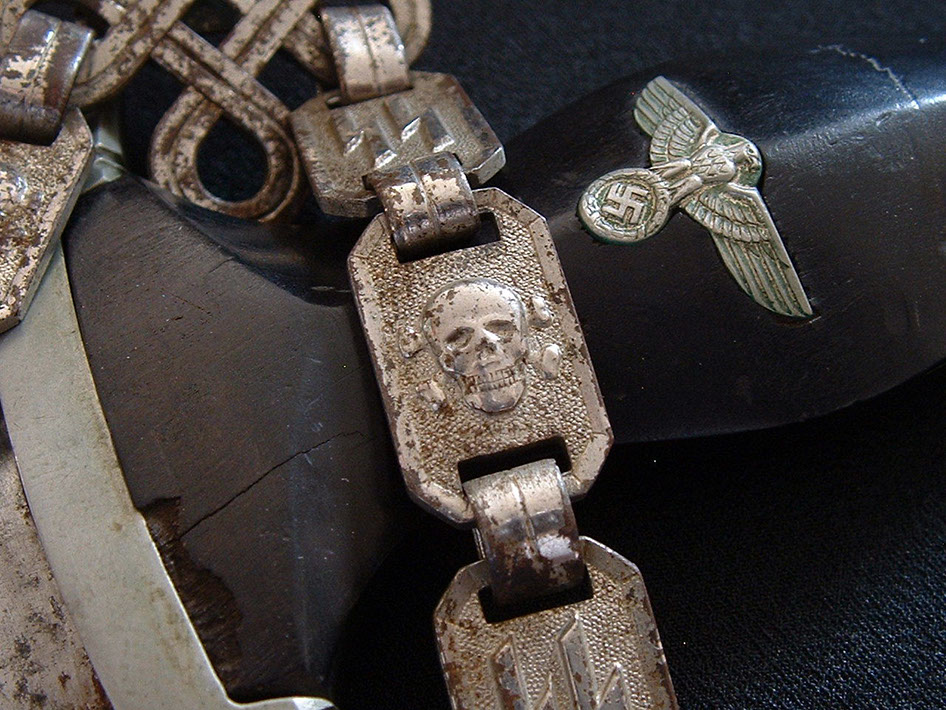
In analyzing them, let’s start with the scabbard. Invariably and with few exceptions, the scabbards are blued, have plated fittings, and equip with Type C chain assemblies. They are not the early Type C’s as I describe above which are so beautiful with heavy struck links, with thick bright plating. But instead they have thin plating comparable to the material that we see going into the RZM period, of 1938 on forward. The chains themselves are of thinner strike, with the plating which is often flaking, and rust developing on the surfaces. And we often see this same deteriorating effect on the upper and lower scabbard fittings too. Collectors are all too familiar with the era when the last of the nickel was going away, and plated components were what edged weapon manufactures were faced with. So, the scabbard and chain fits into this timeline quite easily. And now the actual dagger part of the equation. The profile of the grips on these Gruppe stamped daggers is early. They certainly are not typical RZM pattern handles, that follows the one size fits all theme, which edged weapon components generally evolved into. These grips are earlier style, that required precision alterations to enable them to fit early hardware fittings. We know this, because you can see that in the emblems that are inset within the wood. Both the eagle and the SS runes are nickel. We’ve already have accepted this fact, and know that this to be a mid period manufacturing practice, shown by a ton of SA’s in collections that demonstrate the same. Early left over components being used up, prior to giving away to RZM grips that we will see with later on production.
The grip to cross guard fit on these Type C chains with SA Gruppe stamped fittings is absolutely all over the place. It’s crazy ! Some fit fine, some have low shoulders, other have more spacing than you would expect, it’s truly all over the board. Duh, no kidding. They were early SA dagger cross guards, now paired to SS grips, which were never hand precision fit. So how could this come to be?
In early July of 1934 and shortly after the Rohm purge, a directive was sent out by SA Major General Obernitz. In this 4 step order, the General addressed first and foremost, all honor daggers bearing the Rohm dedication. He states that all honor daggers with the Rohm dedication are to be disposed of at once, and furthermore that they will be replaced with standard SA daggers. It was also permissible to have the dedication inscription removed from the blade, by grinding and then re-polishing, thereby the former honor dagger could then be worn as a standard dagger. In essence, if you didn’t want that scarred up gnarly blade with the ground Rohm dedication on it, you could get your dagger replaced with a standard M33 SA. I certainly imagine that out of the 125,800 daggers awarded with the Ernst Rohm dedication on the blade, that there was a fair amount of these that were traded in. In doing so, edged weapon manufactures would have the opportunity to recycle all of the parts in one fashion or another. The blades could be factory ground and more than likely reissued. Grips with eagle and SA runes emblems could possibly been refitted. But the one thing that would be problematic for the edged weapon firms would be the already Gruppe stamped lower cross guards. As these were marked at distribution centers after the daggers left the factory, it wouldn’t make sense to have a Gruppe stamp on them, not knowing where these daggers were going to be distributed. The cross guards, and in particular the lower cross guards, was most likely not reused on new sold SA daggers.
Unlike the M33 SA or SS daggers, the M36 Chain Dagger was an edged weapon that could be purchased individually by the soldier, by placing his order with the SS Administration offices located in either Munich or Berlin. Any requests to the RZM were strictly ignored. Since the M36 SS Chain Dagger was a direct private purchase edged weapon, not controlled by the RZM, that in itself may have lessened the tight quality control restrictions on these daggers. Being such, an enterprising edged weapon firm may have seen the opportunity to buy up these Gruppe stamped cross guards, and used them in their production of some M36 SS Chain dagger. Of course the contour and shape of these pre-used hardware fittings were only by chance going to fit the precut and shaped SS grips that they had in stock. But certainly the nickel components were going to be better than the plated parts which were coming all too soon. You have to remember, these daggers were not subject to the strict quality control that the RZM imparted on edged weapon companies, and this certainly could have resulted in the Gruppe stamped cross guards being utilized and fitted to these daggers. The edge weapon firm that was responsible for these M36 SS daggers may have even offered these edged weapons at a discount price, knowing that they lacked the precision fit of their counterparts being manufactured by other companies.
The common characteristics of the Gruppe cross guard M36 daggers, usually run the same in terms of construction. Nickel cross guards, nickel pommel nut, and nickel emblems set within early style grips. Yes, the grip in many cases doesn’t fit that great, but as described above, we can already see why that was the case. The scabbard for almost every example that I’ve seen, is a mid period Type C. These shells have plated fitting throughout, including all 3 scabbard fittings and the chain assembly. When sold new in this combination, these components would not clash in appearance as they do today. As collectors very well know, if nickel parts remained un-cleaned over ¾ of a century, they take on a gold / green patina that is observed evenly throughout. Of course the dagger / scabbard looks different today, than it did 70 years ago.
The Gruppe stamped cross guard M36 SS daggers have been found in far too many WWII veteran’s souvenirs, to be explained away as post war fabrications. Many collectors have come to realize and accept this. If a collector personally doesn’t like them, no big deal. They are an anomaly, and an exception to the norm but they truly are 3rd Reich period produced edged weapons. And that’s my take.
JR
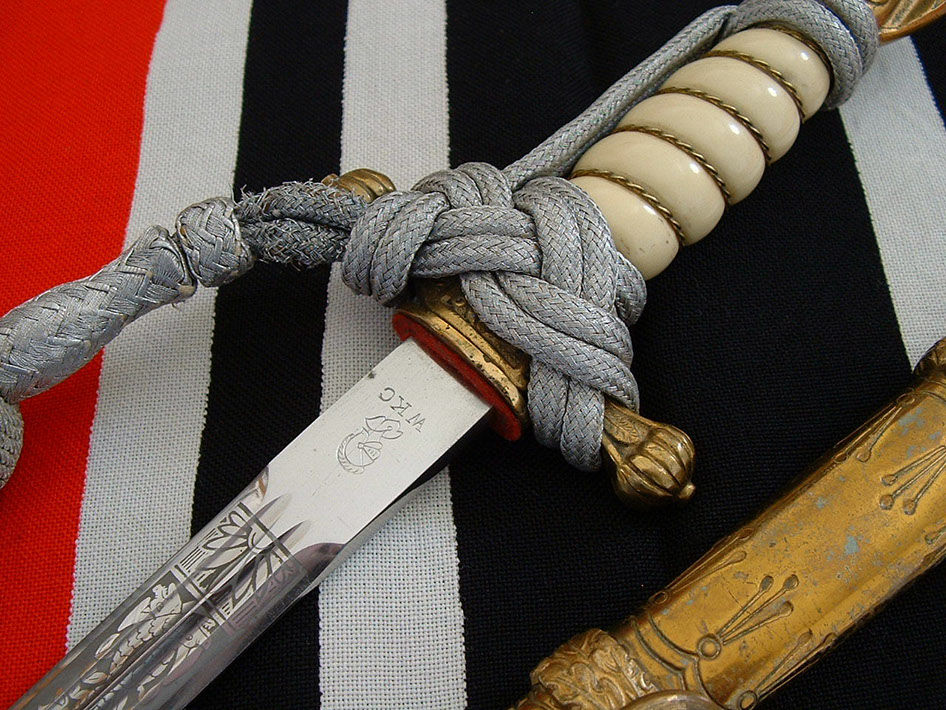
In early days when a cavalry soldier fought on horseback wielding a sword as his weapon, a portapee laced to the hilt of the weapon was a very important survival device. With the cord of the portapee wrapped around the warrior’s wrist and also the hilt of the edged weapon, if the sword were to be knocked from his grasp, he might be able to recover it an continue the fight. Long ago warriors used these knots to gain control of their swords during a battle, which may have made the difference between life and death. But during the 3rd era, these decorative knots became strictly ornamental, and truly look neat as an accoutrement to any dagger or sword.
Each branch of military service had a certain prescribed pattern, in which to tie a portapee to the edged weapon that they wore. And none were more cool than the knots that we see on edged weapons carried by the 3rd Reich Navy. In the 1937 dress code regulations for the Kreigsmarine, there were 10 specific rules that addressed the formalities pertaining to the wearing of 3rd Reich edged weapons. One of those rules describes the instructions on how the portapee for the dirk is to be tied to the grip an crossguard, in a manner know as the “clove hitch”.
Most 3rd Reich edged weapons collectors familiar with Navy daggers, has certainly seen the super neat interlaced pattern of a portapee, when it is correctly tied to the hilt of one of these edged weapons. To this day I marvel at these beautiful toned knots, when ever I view a navy dagger with one tied on it. For those collectors who are not aware of it, these knots are tied quite different of how you might actually think. You don’t start at the pommel as you would when tying a Heer portapee, but quite the opposite. You start at the left side of the crossguard, and lace the cord in a reverse pattern, finally working your way up to the pommel as a last step. You have to wonder, who in the world came up with the idea and pattern, to tie these beautiful Kreigsmarine dagger knots in this fashion?
Along with the dagger and the sword, there is one other Kreigsmarine edged weapon which was worn with a portapee. One of which most collectors have never heard of, let alone ever seen. And that is the Heer style dress bayonet, which was worn during marching formations, landing drills, and parades for the Commander – in- Chief’s of the Navy, Army, and Air Force. And certainly last but not least, all ceremonies involving the Kreigsmarine, at which the Fuhrer was present.
These bayonets in which Navy portapees have been tied around the upper portion of the scabbard frogs, are fantastic to examine. On top of that, I would have to believe that they are incredibly rare, as I’ve only seen 1 other example ever. Take a look at the complex tie on these 2 bayonets, as they truly are artistic in the method that they have been laced. And also, give us a shout if you have one of these 3rd Reich Kreigsmarine bayonets in your collection. As we would love to add the picture of it to this topic.
Ernst Georg Altner was born in Waldheim Germany, on December 4, 1901. His paramilitary career within the 3rd Reich began at the age 25, when Altner joined the SA in January of 1925. At this time he was assigned to the 26th SA Sturm, holding the rank of SA-Truppfuhrer, the equivalent to what would be a senior sergeant. Moving up the ranks, Altner had attained the commissioned officer’s rank of Sturmfuhrer by 1929. Applying for membership in the SS in May of that year, Altner became a probationary prospect within the Schutzstaffel. This was the very same year in which Heinrich Himmler became it’s commander.
Assigned to the 21 Sturm, Altner remained with this outfit for the next 24 months. Two years later by 1931, Georg Altner was working his way back up through the ranks again as he did is the SA, but now an NCO in the SS. By the end of 1932, Altner held the SS rank of Standartenfuhrer, quite an accomplishment considering the short amount of time that he had actually been in the SS. He had now not only become a full time SS leader under the Reichfuhrer Himmler, but also well on his way to being promoted to a General’s ranking.
Holding several SS assignments, judicial, and police titles over the next 6 years, Georg Altner also accepted a Lt. rank in reserve unit of the Wehrmacht. In 1940, Altner found himself pressed into battle for France, as the commander of a Germany Army reserve Pioneer unit. On June 15 1940 he was severely wounded in battle.
Topping out his advancements, Altner was promoted to SS-Brigadefuhrer in March of 1942. He held this General’s rank and title as the Chief of Criminal Investigations (KRIPO), and commander in charge of the city of Dortumund Germany. Ernst Georg Altner’s body was found with a bullet to the head, in a park outside of the city on April 12, 1945.
Listed below are dates of promotions and ranks held by Georg Altner:
SA-Truppfuhrer 1925
SA-Sturmfuhrer 1929
SS-Anwarter 10.05.1929
SS-Truppfuhrer 30.04.1931
SS-Untersturmfuhrer 01.07.1931
SS-Sturmbannfuhrer 27.11.1931
SS-Standartenfuhrer 24.12.1932
SS-Oberfuhrer 09.11.1933
Gerfreiter der Reserve 1935
Feldwebel der Reserve 1936
Leutnant der Reserve 1937
Oberleutnant der Reserve ?
SS-Brigadefuhrer & Major General of the Police 18.03.1942
Below are a list of the awards earned by Altner, throughout his career as a member of both the SA & the SS, 1925-1945
Stahlhelm Service 1922-1925
Golden Party Badge #34339
SA DRL Sports Badge in Bronze
SA DRL Sport Badge in Silver
Equestrian Rider Badge in Bronze
Equestrian Rider Badge in Silver
War Merit 2nd Class with Swords 3.8.42
War Merit 1st Class with Swords 29.1.43
1939 Iron Cross 2nd Class 1940
Black Wound Badge 1940
Ehrenwinkel der Alten Kampfer
SS Totenkopf Ring
SS Zivilabzeichen #1117
SS Julleuchter 16.12.35
SS Honor Sword 1936
SS Honor Dagger
NSDAP # 34339
SS Party # 1421
Elected Member of the Reichstag 1933-45
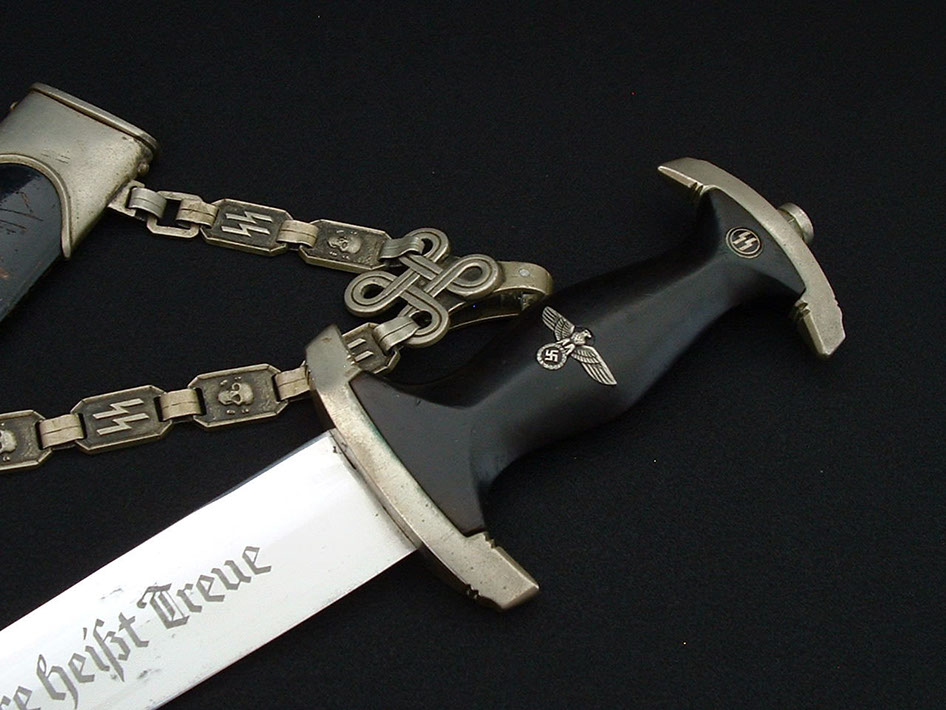
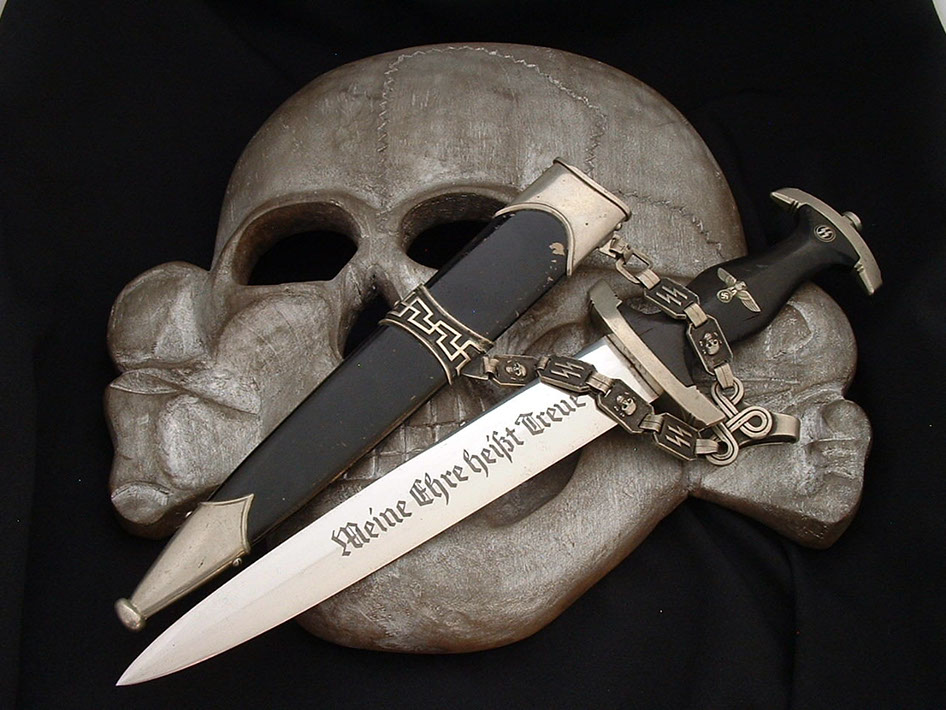
In November 2012, 3rd Reich militaria collector and historian Chris Voorhees directly veteran sourced this M36 SS chain dagger from the family, and for the first time brought it to the attention of the collecting community. The historical importance of this edged weapon goes without saying. After all it was the personal property of a known figure and ranking officer within the hierarchy of the infamous an notorious 3rd Reich Shutzstaffel. And beyond that, it’s owner had a career within the SA and the SS which had span 20 years from the beginning of the NSDAP’s infancy, rising all the way up to the rank of an SS General !
The edged weapon itself displays characteristics which we see with SS chain daggers produced in the initial production time frame, during the fall of 1936. Among those are the unique lettering to the Meine Ehre heist Treue blade motto, and the Type A septum skull links in the chain assembly. The dagger is SS numbered to Altner on both the underside of the lower crossguard, and on the lip of the scabbard.
All Content is Copyright property of Meda Militaria, LLC. 2018-2019